

 Kanji 感じ
Learn Japanese, and Japan, in your own language.
Kana, then all 2,998 kanji in the order Japanese schools teach them, 78 lessons on how life in Japan works, and your first conversations. Taught from 18 languages, so English is not the price of entry.
Get Kanji 感じ
Scan with your phone. It opens Google Play on Android and the App Store on iPhone.
Not through English
Most Japanese apps teach only through English. Kanji 感じ teaches from 18 languages.
If English is your second language, learning Japanese through it means translating twice. In Kanji 感じ the explanations, the meaning of every kanji and word, the memory sentences, the Living in Japan lessons and the first conversations are in your language.
- English
- 简体中文
- 繁體中文
- Tiếng Việt
- 한국어
- Filipino
- नेपाली
- Bahasa Indonesia
- Português (Brasil)
- မြန်မာ
- සිංහල
- Français
- Deutsch
- Español
- Svenska
- Suomi
- Українська
- Русский
The first ten follow the largest foreign communities living in Japan: Chinese, Vietnamese, Korean, Filipino, Nepali, Indonesian, Brazilian, Burmese, Sri Lankan and Taiwanese. The app itself can also be shown in Japanese.
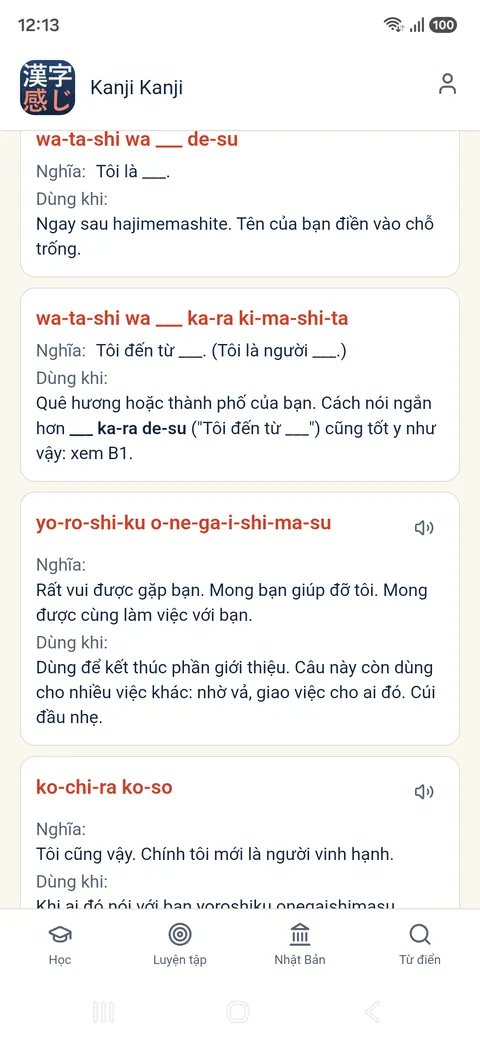
Tiếng ViệtVietnamese 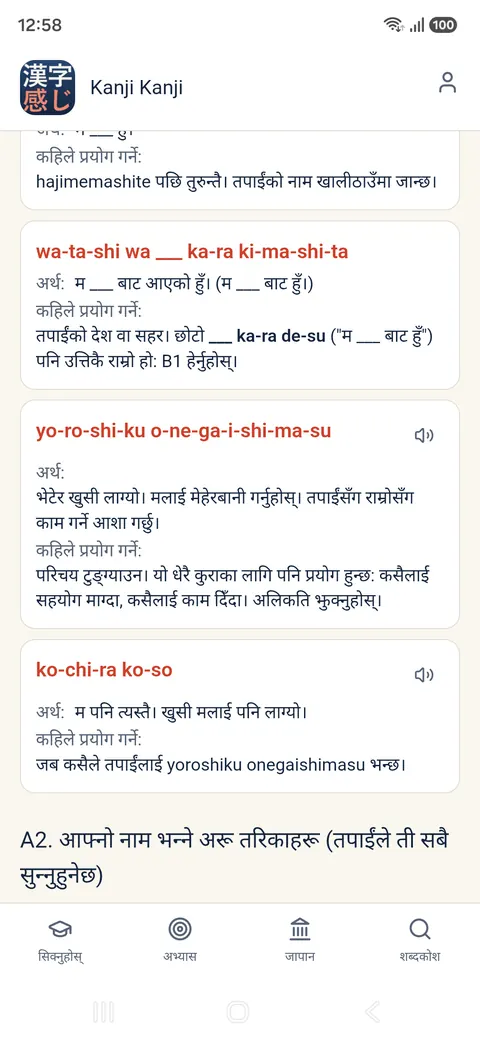
नेपालीNepali 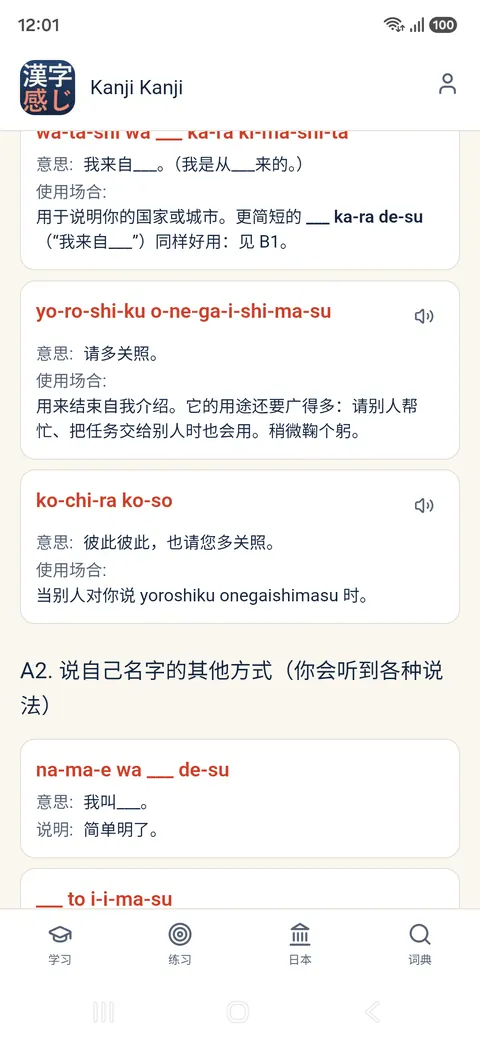
简体中文Chinese (Simplified) 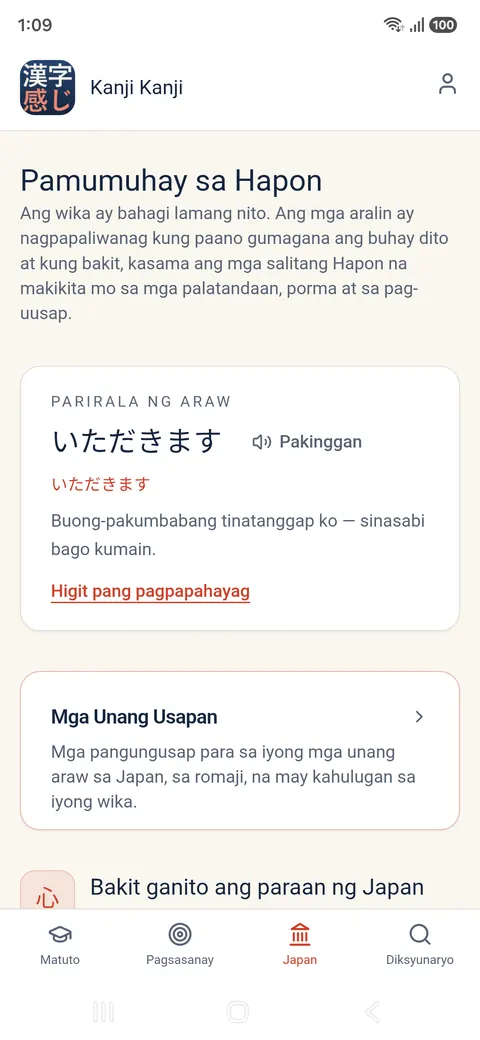
FilipinoFilipino 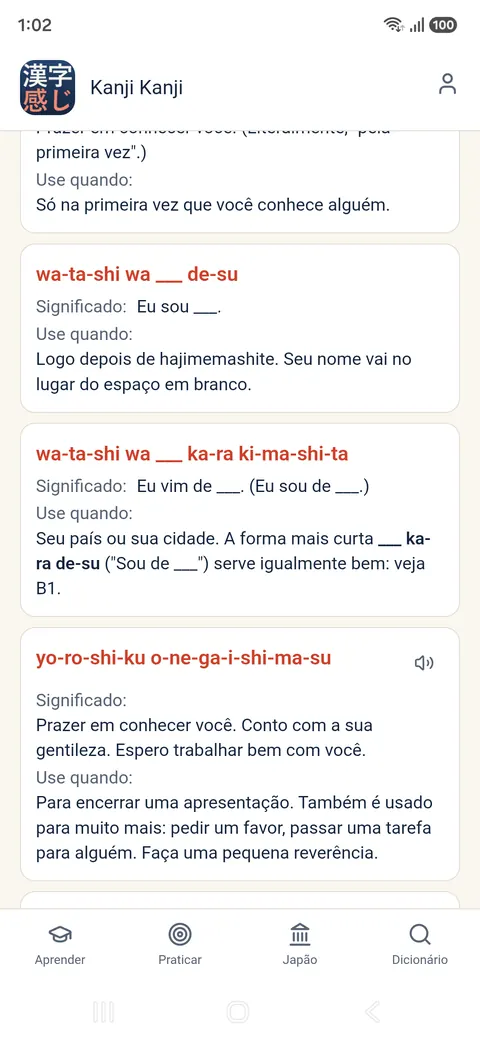
PortuguêsPortuguese (Brazil) 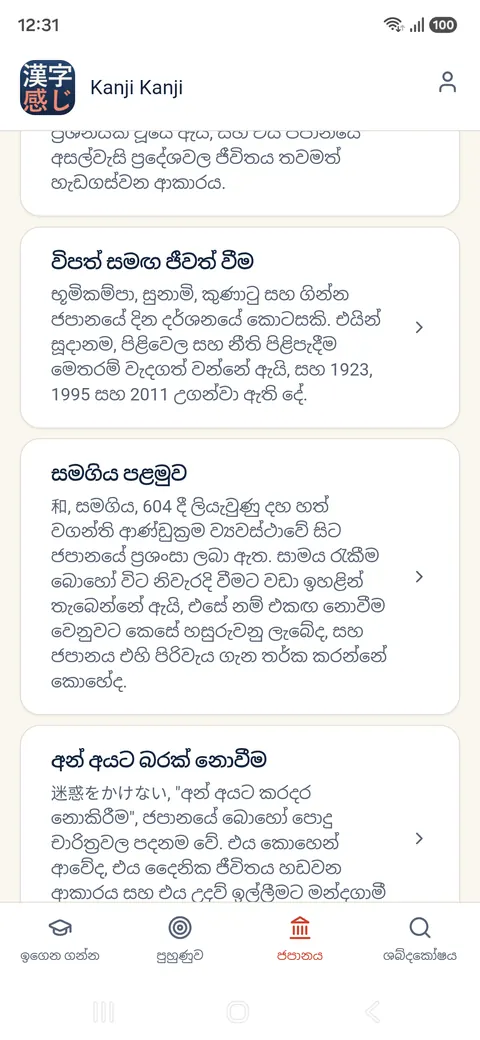
සිංහලSinhala 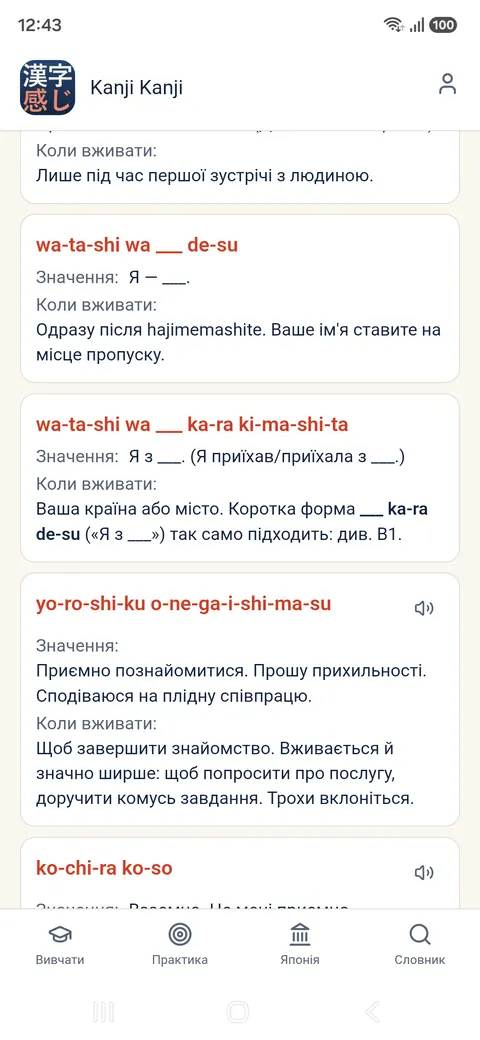
УкраїнськаUkrainian
How the translations are made: by machine, from the English, then checked automatically for structure, numbers and every Japanese term. English is the reviewed original. On the Living in Japan lessons the English is one tap away, and every lesson page has a link to report a translation problem, so the people reading each language help correct it.
Meaning, not just words
It teaches what people mean, and why they say it.
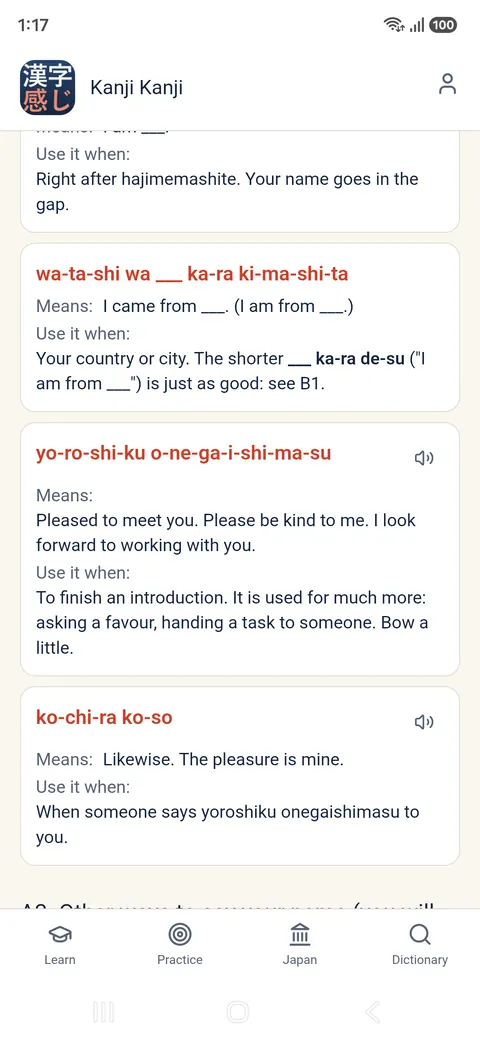
A translation that only swaps words leaves you saying the right thing at the wrong moment. Every phrase comes with what it means, when to use it, and the reason behind it. Culture is not trivia here; it is part of the lesson.
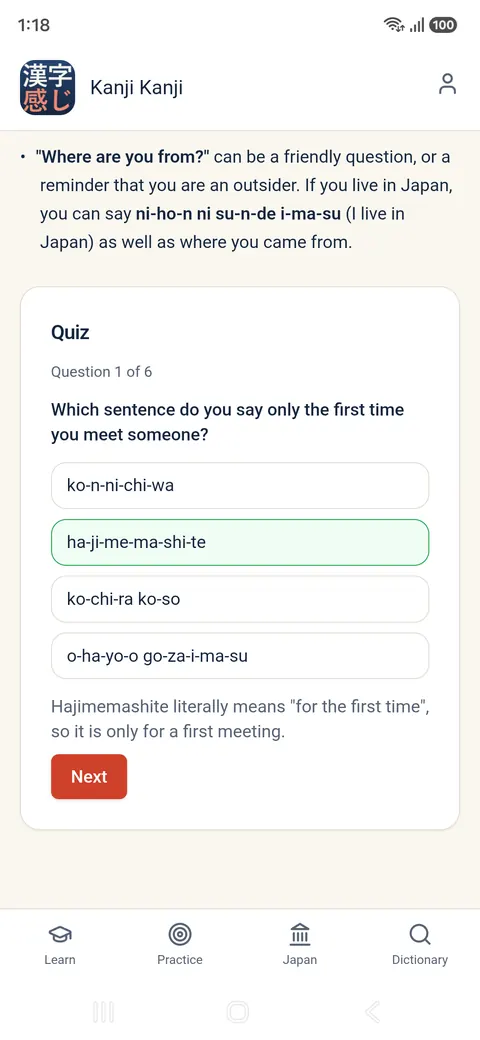
はじめまして
ha-ji-me-ma-shi-te
Literally "for the first time", so it is only for a first meeting. Kanji 感じ asks you when you would say it, not just what it means.
すみません
su-mi-ma-se-n
Textbooks teach the word, but not when it means sorry, when it means thank you and when it means excuse me. That is the part that decides whether you sound right.
いただきます
i-ta-da-ki-ma-su
"I humbly receive", said before eating. Why Japan does things this way is explained from the Japanese point of view: understand the why, and the rest makes sense.
First conversations, before you can read
23 short lessons of the sentences you need in your first days in Japan, written in romaji so you can speak before you read kana, with recorded voices and a quiz. Each sentence says what it means and when to use it, in your language.
Casual Japanese first, keigo when it makes sense
Japanese children hear polite keigo long before they have to use it. Kanji 感じ follows the same order: understanding keigo is listening, using it is speaking, and they come in that order.
Living in Japan
Before the language, how life here works.
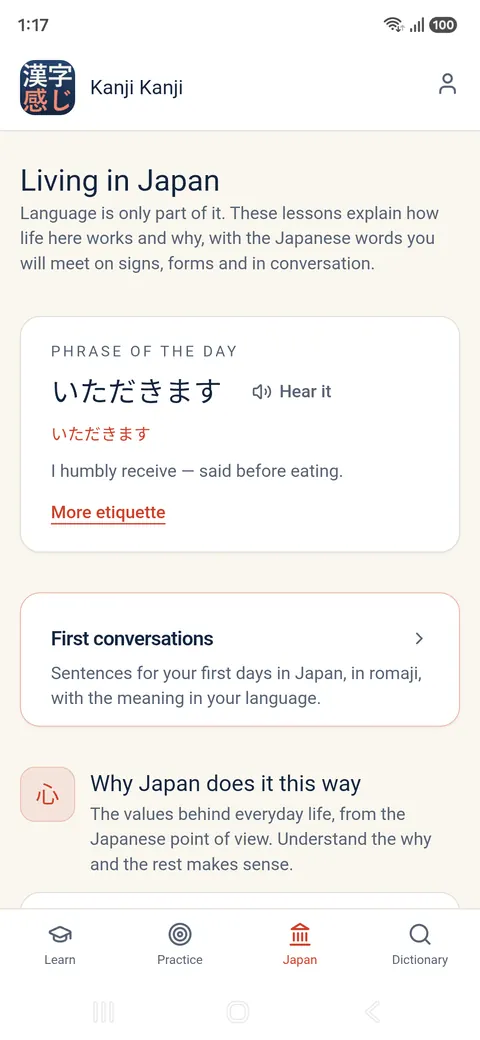
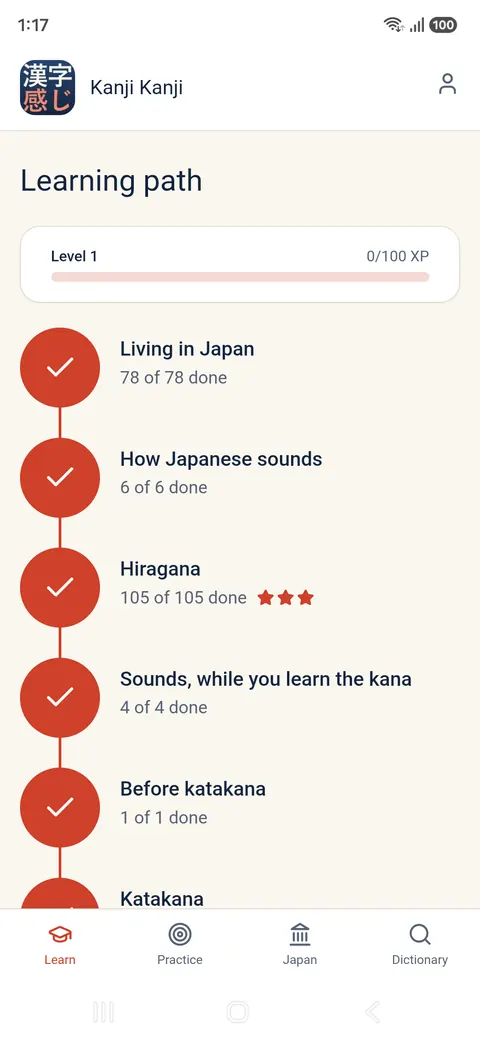
78 Living in Japan lessons come before the language course, free for everyone: emergencies, registering where you live, insurance, tax, schools, elections, values and communication. Each is researched from official sources and dated, with the Japanese you will meet on signs, forms and at the counter.
Our founder has lived in Japan for 19 years and handled visa and permanent-residency applications, tax returns, a mortgage and a house, all in Japanese. Kanji 感じ exists so you can do it yourself.
A phrase of the day, 133 etiquette phrases, and the reasons behind the rules, such as why rubbish is sorted, so they stop feeling arbitrary.
The course
All 2,998 kanji, in the order Japanese schools teach them.
A path that starts where you are
Kana first, then the everyday (jōyō) and name (jinmeiyō) kanji in the official order. A placement test starts you at your level. The foundation lessons are required, because a missed rule, like a missed character, makes everything after it read wrong.
Every character, properly
Each kanji has its meaning in your language, a memory sentence, its readings, stroke-order animation with a handwriting check, speaking practice and the compounds it appears in.
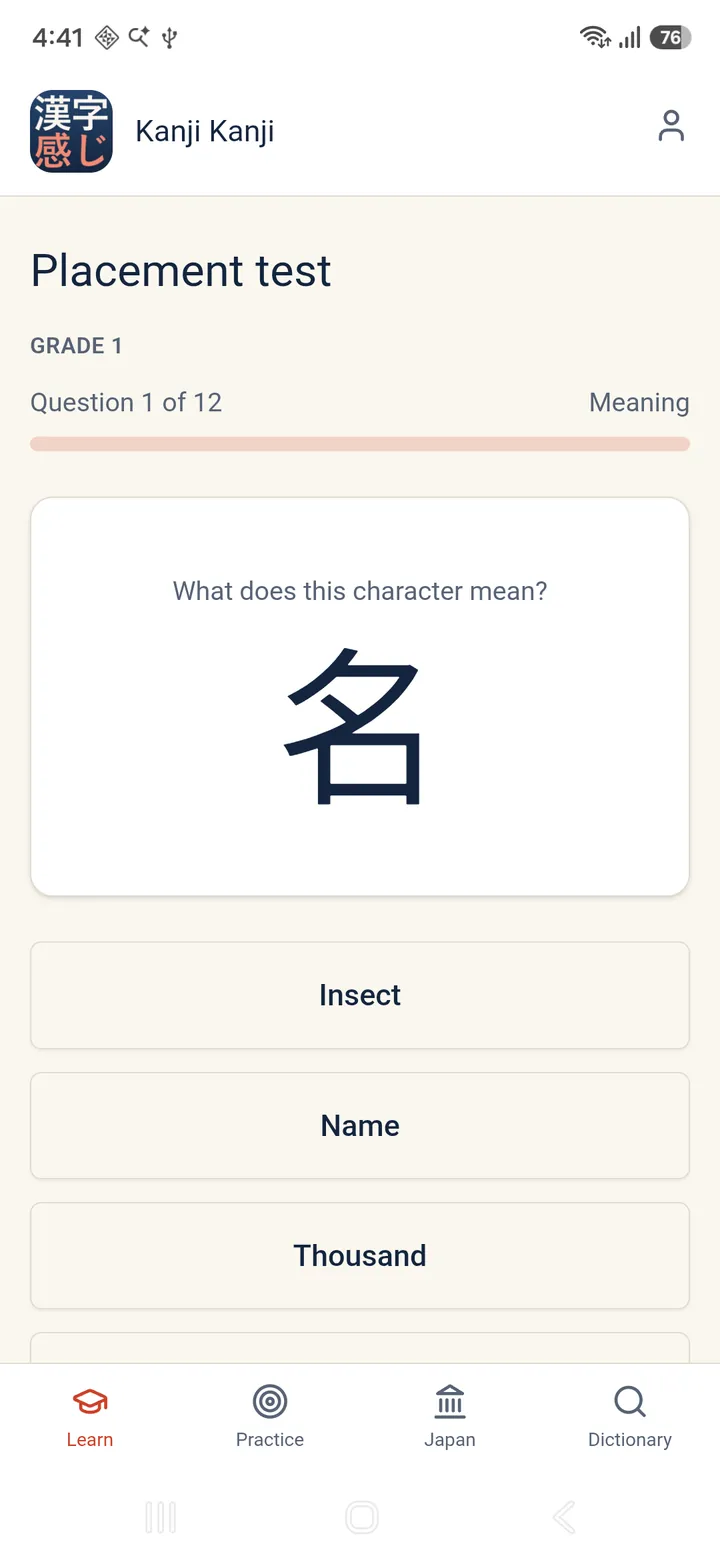
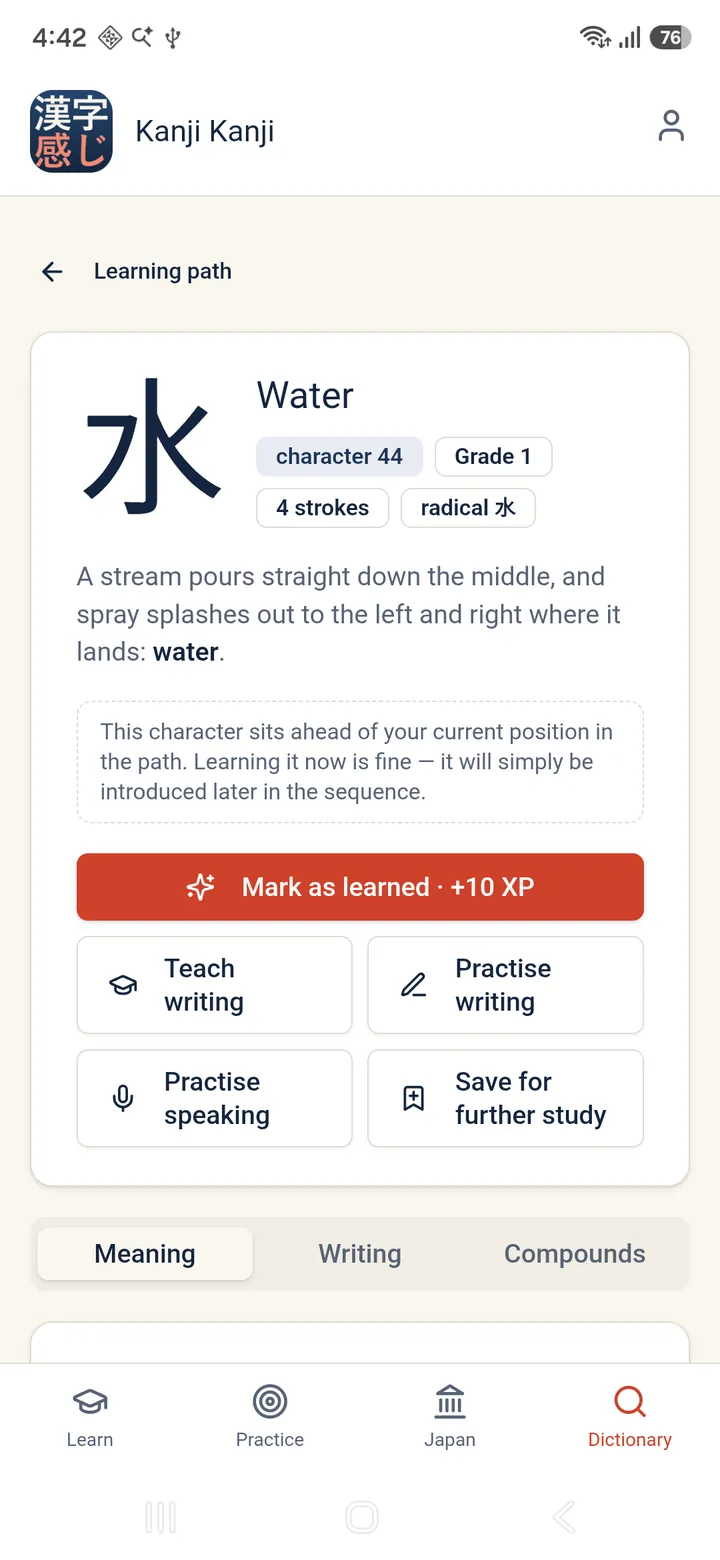
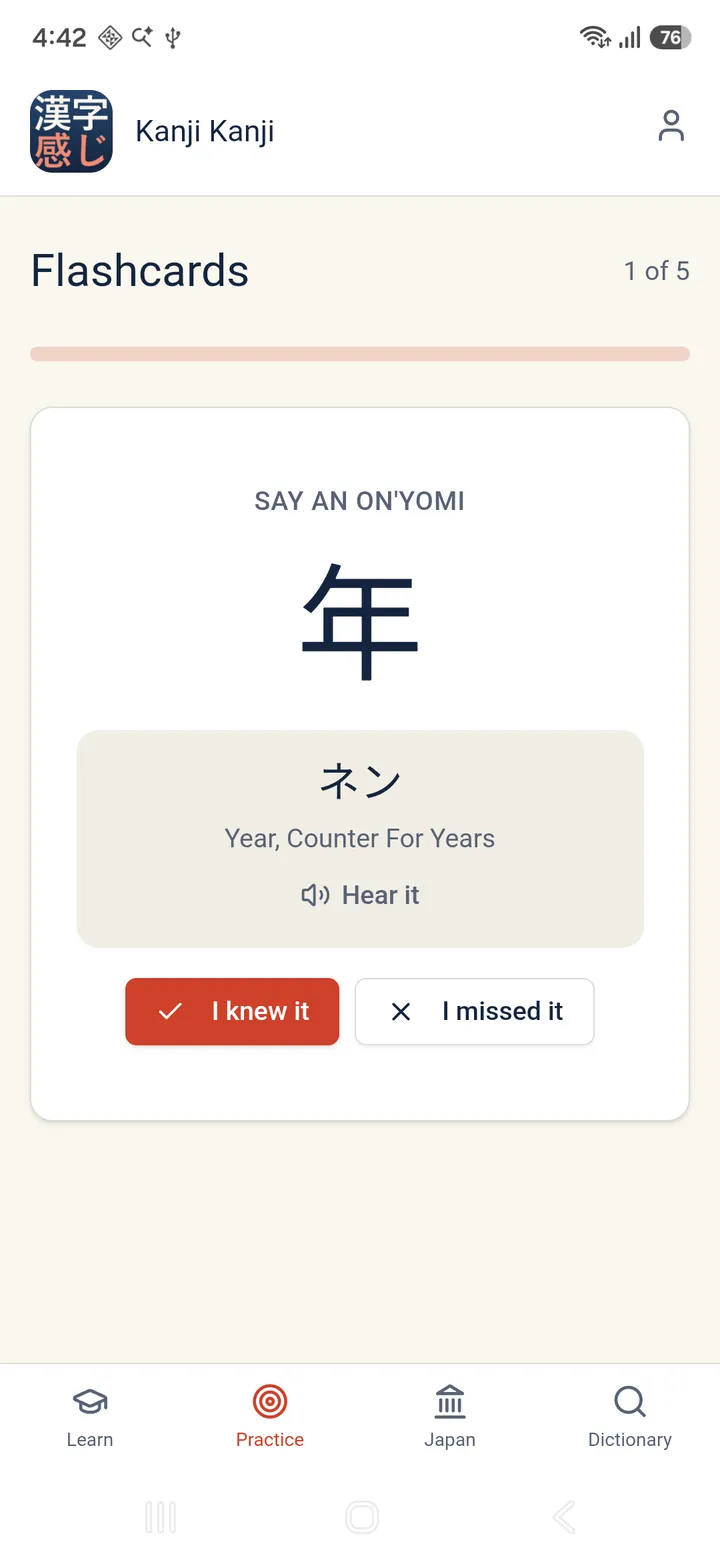
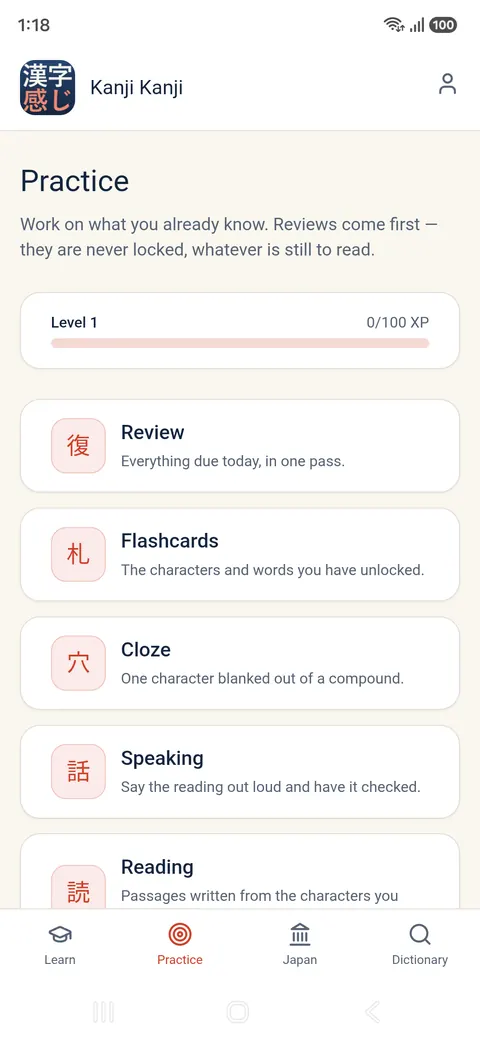
Reviews at the right moment
Every character comes back after 1, 3, 7, 14, 30, 60 and 120 days, stretching as you get it right. Miss one and it starts again. You never have to decide what to revise.
Mistakes become lessons
Every miss is sorted: the reading, the meaning, the shape, or a mix-up with another character. A character missed three times in a row is taught again on its own.
Every skill, not just recognition
Reading passages written only with characters you already know, listening, speaking, cloze and flashcards.
A dictionary that speaks
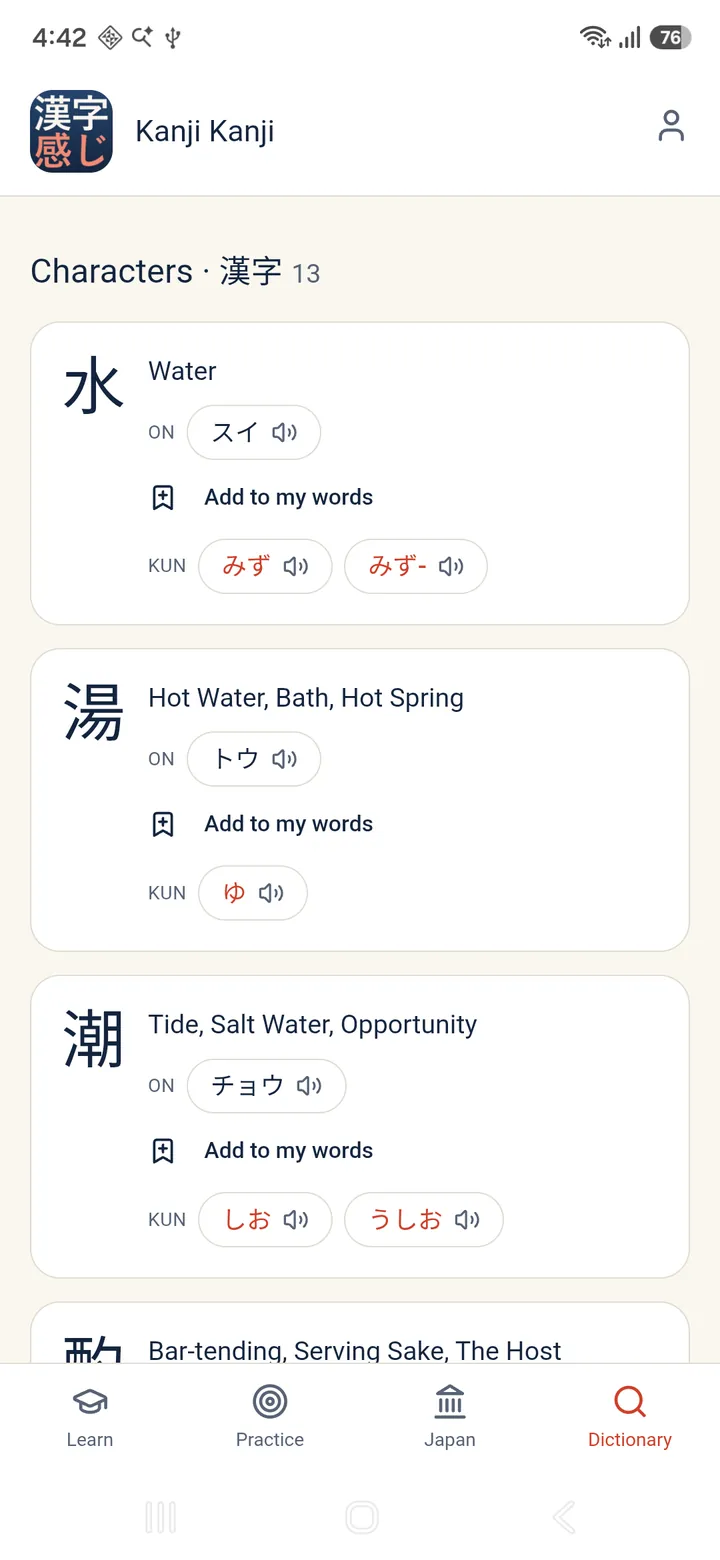
More than 18,000 words and 22,000 example sentences, with on and kun readings. The whole course has natural recorded voices, female and male, and it is on your phone, so it works offline.
The story of Japanese
Where the writing system came from: the Kojiki and Nihon Shoki, the Man'yōshū, and the Tale of Genji, written in hiragana by a woman of the Heian court.
Effort is rewarded
Each grade ends with a final exam, and the better you do, the less the next grade costs.
What schools will not teach you
An optional 18+ section teaches you to recognise rough language, insults and harassment, how serious each is, and how to respond calmly. Taught to recognise, never to use.
Not a game
No shortcuts, on purpose. Every lesson is required, because understanding comes before judging, and that is how harmony is kept.
The Living in Japan lessons are free for everyone, and so is Grade 1 of the language course. Further grades are in-app purchases; prices are shown in the app and vary by country. Rated 18+ because of the optional rough-language section.
Who it is for
For people who want to live in Japan, not only visit it.
Moving to Japan
Work, study or family: the systems, the unwritten rules and the Japanese for each of them, before you need them.
Already living here
For the ward office, the forms and the counter, so you can handle them yourself instead of relying on someone else.
Learning from home
For learners anywhere who would rather study in their own language than through English.
Do I need to know English?
No. The app follows your phone's language, and you can switch on the sign-in screen or in your profile at any time. The lessons, the kanji and word meanings and the first conversations are in each of the 18 languages.
What can I use for free?
All 78 Living in Japan lessons and Grade 1 of the language course. Later grades are bought one at a time in the app.
Does it work offline?
Yes. The course content is on your phone, and the recorded voices can be downloaded by grade.
Not only language, but context, life and culture.
Start with Living in Japan and Grade 1, free, in your own language.
Get Kanji 感じ
Scan with your phone. It opens Google Play on Android and the App Store on iPhone.